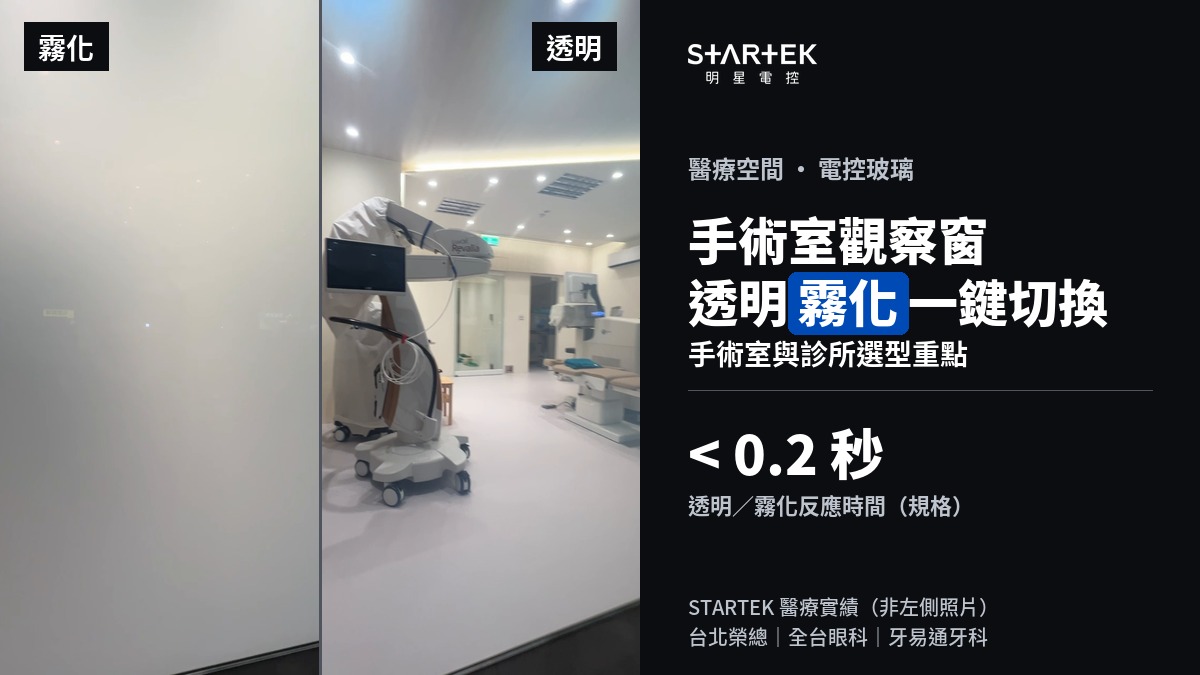
How to Design a Glass Partition for a Study? Open Study, Half-Height Glass Partition, and PDLC Privacy Planning
When planning a home, many people like the transparency of an open study room; but after actually living in it, they realize that what they are looking for isOpen study room regret。
The reason for regret is usually not because the study room does not look good, but because one of the following is missing:
- Sense of boundaries when focusing
- Privacy while video or working
- The sense of zoning between air conditioning and sound
This is whyStudy glass partition will become an increasingly common solution. It does not make the study into a small closed room, but finds a better balance between lighting, vision and usability.
The 3 most common ways to study room partitions
1. Completely open
The advantages are obvious:
- looks big
- Transparent light
- Lightweight design
But the disadvantages are also very direct:
- Easily distracted by the living room or dining room while working
- Video conferencing has no boundaries
- The space is difficult to switch between "sharing" and "focus"
So many people don’t like open-plan apartments at first, but after living there for a long time they find that they’re not good enough for real life.
2. Half wall glass partition
This is a very practical compromise.
The benefits of half-wall glass partitions are:
- A little more borderline than fully open
- Retains more daylight than a complete solid wall
- Not too heavy for residential spaces
Therefore,Half wall glass partition price Behind this type of search, it usually means that users are looking for more mature study room solutions, rather than simply looking at inspiration pictures.
3. Full glass partition or PDLC Electronic Control Glass (PDLC)
If you want your study to remain visually open during normal times, but still have a sense of independence when working, having meetings, or needing to focus, an all-glass partition is a further step forward.
And when you want this space to be switched between "open" and "private",PDLC Electronic Control Glass It will be more accurate than fixed transparent or fixed frosted glass.
Why do so many people regret having an open study room?
The most common problem is not style, but usage patterns that are different from imagination.
You originally thought that the study room was just for sitting occasionally, but later it may become:
- Working from home for long periods of time
- Fixed video conference
- Need quiet time to read or organize documents
- Family activities in the living room at the same time
Once the intensity of use increases, the disadvantages of being completely open will be magnified. At this time, when we go back to mend curtains, subsidize membranes, and mend shields, we often fail to think through the logic of the partitions clearly from the beginning.
Who is suitable for a study glass partition?
Glass partitions are generally better suited than solid walls if you:
- Don’t want the lighting in your house to be cut off
- Want the space to still look continuous
- Need working boundaries but don't want to sacrifice overall vision
- I want to retain the sense of design instead of making it a heavy small room.
This is why many residential study rooms in recent years have changed from "making walls" to "making glass systems."
Under what circumstances should PDLC be directly considered?
If your study has the following needs at the same time:
- Want to maintain a sense of openness during the day
- Want privacy during video chat
- Occasionally I want to cut the space into a more independent state
- Don’t want to hang curtains permanently or make fixed matte surfaces
Then it is not just a problem of glass partitions, but a problem of spatial state switching.
The value of PDLC is very clear here: transparent normally, atomized when necessary.
This model is very suitable for residential study rooms, because the home space is not like a pure commercial office, and it often needs to be compatible with different life styles in the same field.
Half wall, full glass, PDLC, how to choose?
Open study room
Suitable situation:Low usage intensity, focusing on style
Advantages:The most transparent space
To note:Minimum sense of boundaries and privacy
Half wall glass partition
Suitable situation:Want to retain light and increase the sense of partitioning
Advantages:Good sense of balance and high housing acceptance
To note:Privacy remains fixed
Full glass partition
Suitable situation:I need to define the study area, but I don’t want to make a solid wall
Advantages:Good lighting and sense of extension
To note:It may still be too transparent when video chatting or concentrating
PDLC Electronic Control Glass
Suitable situation:To switch between open and private
Advantages:The most flexible usage scenarios
To note:More accurate planning of construction methods and electrical controls is needed
The entry point for STARTEK
The advantage of STARTEK is not to make the study partition into any kind of glass, but when you already know clearly what you care about:
- sense of space
- daylighting
- privacy switch
- Integrated design
At this time, STARTEK starts withPDLC Electronic Control Glass The core planning will be closer to your usage needs than ordinary fixed glass.
Existing product facts currently available for external use include:
- The core technology is
PDLC - Standard driving voltage
48V AC - Common power consumption is about
5-10 W/m² - Standard warranty
5 years, which can be extended for a fee to10 years
Conclusion: There are not only two answers to a study room: open or closed.
If you are currently stuck on the idea that "an open study room looks great, but you are afraid of regretting it later", it means that what you really need is not an inspiration picture, but a partition plan that is more in line with the rhythm of life.
Half-wall glass partitions are suitable for those who want a little more boundary.
Full glass partitions are suitable for those who want to retain lighting and visual extension.
If you want to maintain a sense of openness and switchable privacy at the same time, you should evaluate it directlyPDLC Electronic Control Glass。
FAQ
Is it really easy to regret having an open study room?
If the work is highly intensive and often requires concentration or video chat, it is indeed easy to find that the completely open design lacks a sense of boundaries and privacy.
Are half-wall glass partitions suitable for small-square-foot residences?
It's usually suitable because it adds a sense of zoning without cutting off the light like a full solid wall would.
Is it too exaggerated to do PDLC in the study room?
If what you need is switchable privacy rather than fixed transparency or fixed fog, then it is a more accurate solution, not just advanced.
ending
If you are currently planning a residential study room, but you are stuck on "I don't want to make a dead wall, and I don't want to regret it later", you can first sort out the floor plan, size and daily usage to STARTEK, and we will quickly help you decide whether to make a half-wall glass, full glass, or go directly to the PDLC solution.
Related Articles


Latest Articles
-
PDLC vs Electrochromic vs SPD: How to Choose the Right Switchable Glass Technology
Smart Glass Revealed -
How Long Does PDLC Smart Glass Last? Durability Tests, Warranties, and Care
Smart Glass Revealed -
Retrofit PDLC Film or Laminated Switchable Glass? When Retrofit Film Works
Smart Glass Revealed