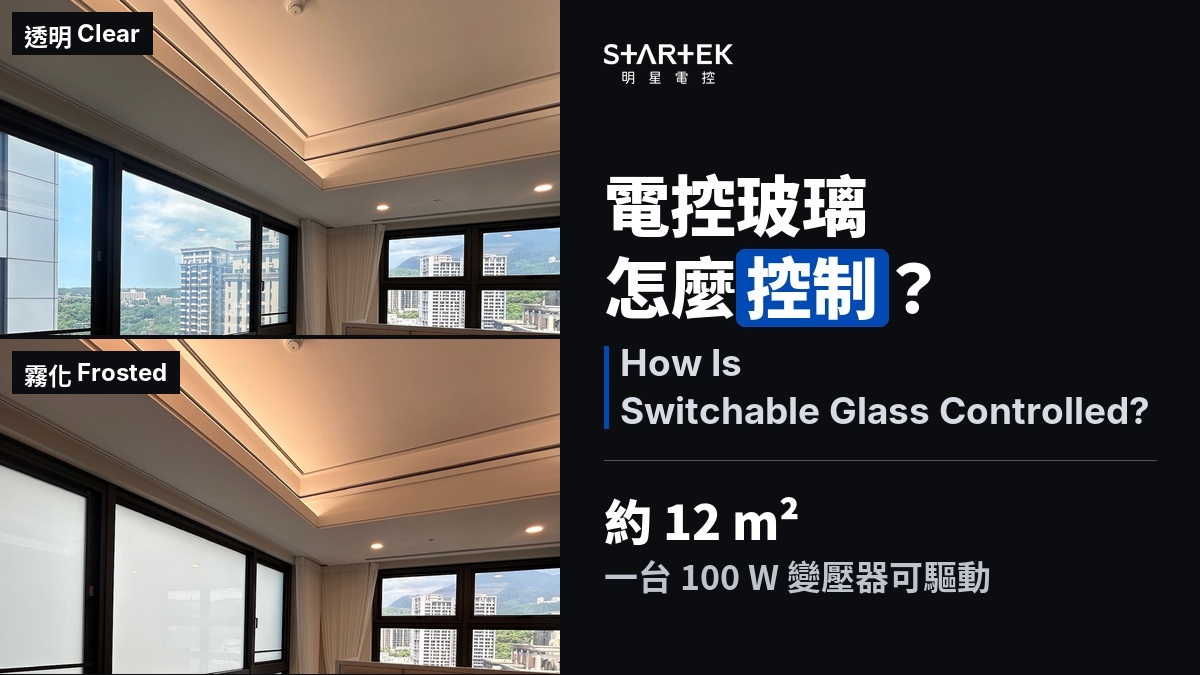
How Is Switchable Glass Controlled? Remotes, Zoning, and Scheduling Essentials
After PDLC switchable glass is installed, how do you control it? Remote, phone app, or wall switch? How many transformers does one room need? Can you schedule it to switch automatically? These are the most common questions from designers and building owners. This article covers the three pillars of PDLC switchable glass control: remotes, transformer zoning, and smart scheduling. STARTEK is a Taiwan-based PDLC switchable glass specialist, offering end-to-end service from planning to installation.
Key Facts
- PDLC switchable glass is transparent when powered on, frosted when powered off, switching in under 0.2 seconds (all standard PDLC models)
- Each independent control zone gets one remote, paired with all transformers in that zone
- One 100 W transformer drives about 12 m²; if a single independent zone exceeds 12 m², use one larger unit (200 W for about 24 m², 300 W for about 36 m²) instead of stacking 100 W units. Final configuration depends on zoning and electrode layout
- Compatible with smart home systems (e.g. Aqara gateway) for automatic frost scheduling during unoccupied hours
- Power consumption: approximately 5 W/m²; frosted state draws zero power
Basic Control: Remotes and Wall Switches
The standard control method for PDLC switchable glass is a wireless remote. Each independent control zone — typically one room or one partition group — gets one remote. Press once to switch between clear and frosted.
Pairing logic: one remote controls all transformers in its zone, not one transformer per remote. Even when one zone needs two or more transformers (above 36 m²), it still takes only one remote — they all switch together.
Wall switches can also be added, operating like a standard light switch.
Transformer Zoning: How to Calculate the Count
The standard STARTEK transformer is rated at 100 W (dimensions: 110 × 46 × 179 mm, weight: 1.6 kg, input: 110/220 VAC, output: 65 VAC) and drives about 12 m² of switchable glass; 200 W (about 24 m²) and 300 W (about 36 m²) units are also available.
Calculation: size each independent zone by its own area — up to 12 m² takes one 100 W unit; above 12 m², use one larger unit (200 W for about 24 m², 300 W for about 36 m²) instead of stacking 100 W units. A zone means an independent circuit, which may not equal one room — if a shared wall has separate circuits on each side, each side is calculated independently.
Examples:
- Meeting room A: 9.18 m² → within 12 m² → one 100 W unit
- Meeting room B: 13.24 m² → above 12 m² → one 200 W unit
- Shared wall, left side 13.65 m² → one 200 W unit; right side 20.26 m² → one 200 W unit (do not combine into 33.91 m² → one 300 W unit, as they are separate circuits)
Final count is confirmed during the design phase and documented in the site survey report.
Smart Scheduling: Automatic Frost During Off-Hours
Switchable glass can be integrated with a smart home system (e.g. Aqara gateway) to automatically revert to frosted (powered off) during unoccupied hours.
Recommended schedule:
- Weekdays: 19:00 → next day 08:00, automatic frost
- Weekends and holidays: frosted all day
- Extended holidays or maintenance periods: disconnect the zone outlet entirely
Three benefits:
1. Fewer switching cycles — Tested to 80,000 on/off cycles with only 0.29% transmittance loss, corresponding to over 10 years of daily use intensity. Scheduled rest avoids unnecessary accumulation.
2. Frost is the resting state for standard PDLC — powered off means frosted at zero power, also eliminating transformer standby draw.
3. Easiest durability measure to implement — set once, runs continuously with no user action required.
When paired with occupancy sensors (e.g. Aqara FP1E), set a 10–15 minute vacancy delay to avoid frequent triggers from brief absences. When schedule and sensor conflict, let the schedule take priority.
Note: Sensors and gateways require a separate always-on power source. The Aqara FP1E needs 5V/1A USB power. If it shares the same outlet that the schedule powers off, the sensor will also go dark and will not recover the next day.
FAQ
Q1: How many remotes does one meeting room need?
One per independent control zone. One meeting room with one zone gets one remote, regardless of how many transformers are inside.
Q2: Where are the transformers installed?
Typically inside a ceiling access panel. Both the primary side (110V power) and secondary side (low-voltage leads to the glass) are routed to the same access point.
Q3: Can switchable glass be controlled from a phone?
Yes. Once connected through a smart home gateway (e.g. Aqara), you can control switching via a phone app and set schedules or sensor-linked automation.
Q4: What happens to the glass during a power outage?
Standard PDLC switchable glass defaults to frosted (privacy mode) when power is cut — no electricity needed to maintain privacy.
Q5: What is the transformer warranty?
STARTEK transformers carry a 2-year warranty (excluding damage from misuse).
Ready to plan switchable glass controls for your project?
Related Articles
Latest Articles
-
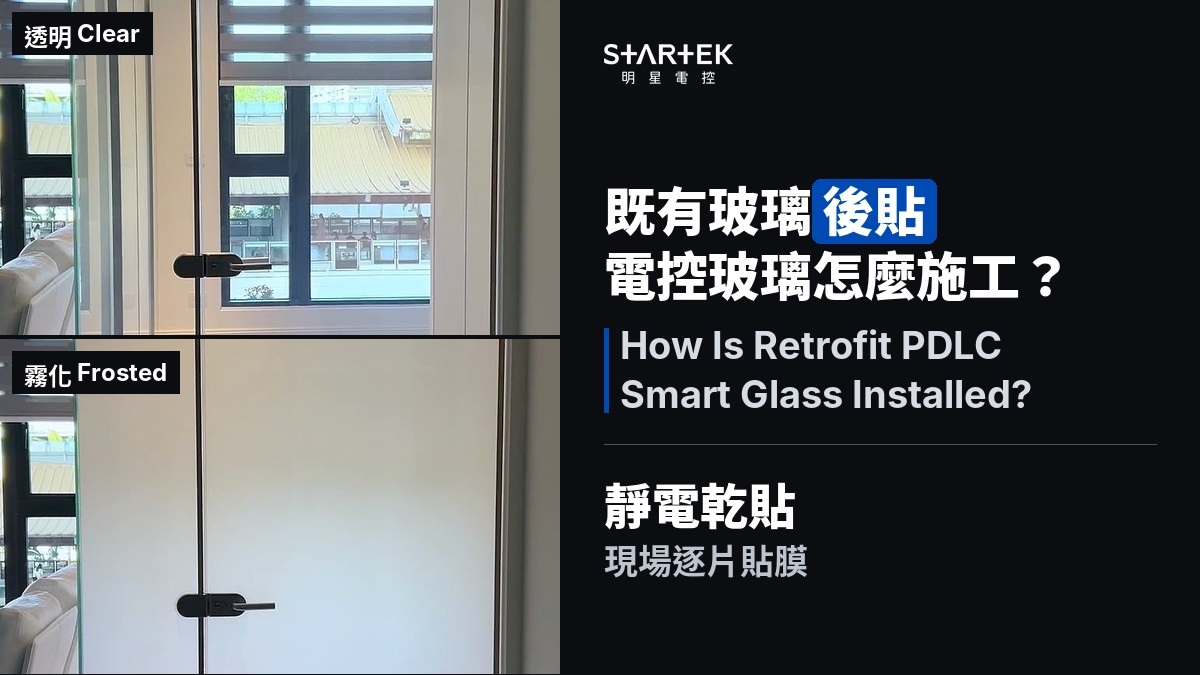
How Is Retrofit PDLC Smart Glass Installed? The Process from Survey to Handover
Smart Glass Revealed -
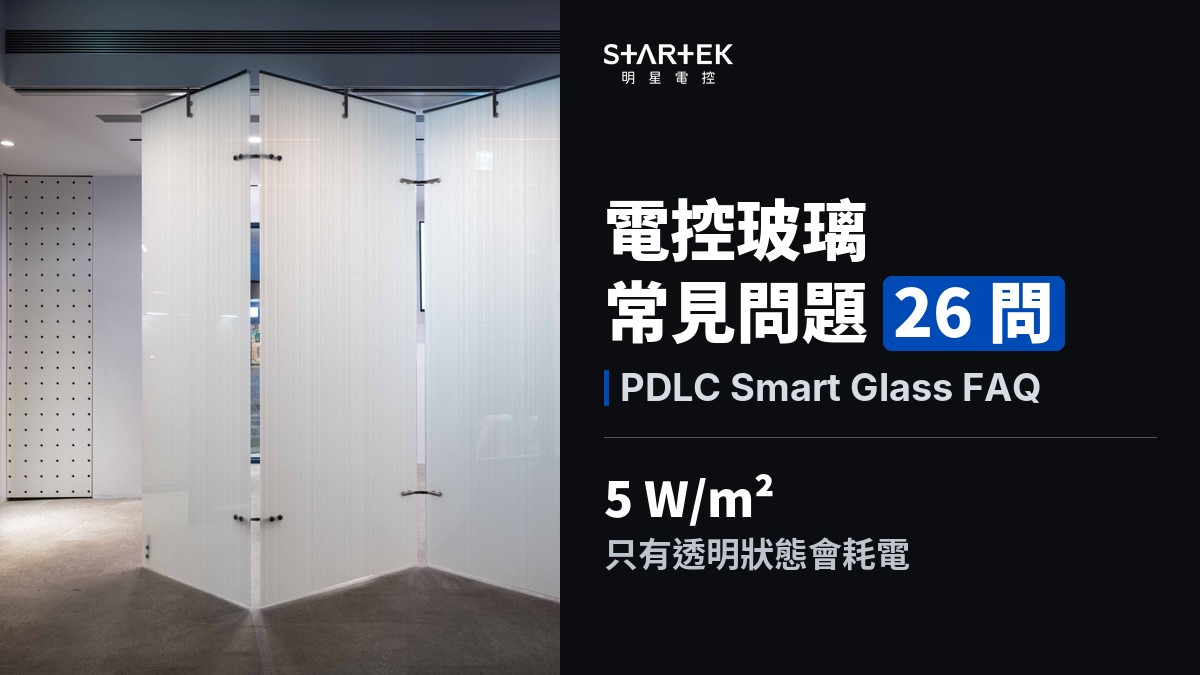
PDLC Smart Glass FAQ: 26 Questions Answered
Smart Glass Revealed -
How Is Switchable Glass Controlled? Remotes, Zoning, and Scheduling Essentials
Smart Glass Revealed