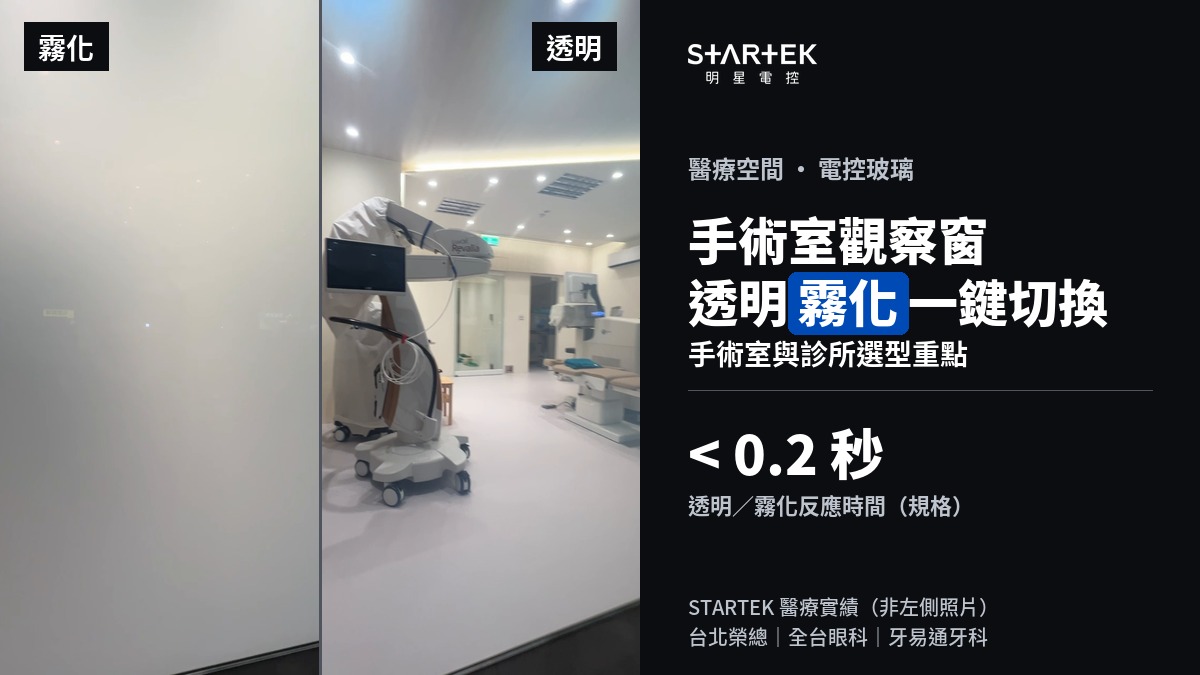
What Are the Drawbacks of Smart Film? Focus on Clarity, Installation Method, Warranty, and Maintenance
SearchDisadvantages of dimming film It is usually not the first time for people to see this product.
You may have seen the diagram of transparent and foggy switching, and you also know that it is often used in conference rooms, study rooms, clinics and high-end residences. What really makes people hesitate is the following questions:
- Will it look foggy and not clean enough?
- Is the transparent state as clear as ordinary glass?
- Will it be difficult to repair?
- How about the warranty?
- Is this a short-term cool thing, or is it a long-term solution?
These concerns are valid and deserve to be addressed directly.
Let’s talk about the conclusion first: the dimming film is not without its shortcomings, but it depends on whether you can accept its trade-offs.
There are certain conditions in exchange for any cubicle scheme.
The disadvantages of traditional light partitions are that they are fixed, opaque, and visually heavy.
The disadvantage of general glass partitions is that they are transparent but provide fixed privacy.
The choice between dimming film or PDLC Electronic Control Glass (PDLC) is that it provides a "switchable state", but it also puts forward higher requirements for construction methods, product stability, wiring and planning accuracy.
So the real question you should ask is not "Are there any shortcomings", but:
Do these shortcomings just hit what you care about most?
Common Disadvantages 1: Transparent state does not mean exactly like ordinary clear glass
This is the most common place and should be explained clearly first.
Many people who come into contact with the dimming film for the first time will think that the transparent state means that they cannot see any difference at all. But in fact, if you have very high requirements for ultimate clarity, the transparent state of PDLC is still a different system from that of general clear glass.
This does not mean that it is not good, but it means that the focus of its product value is not on "completely like nothing", but on:
- Maintain a sense of transparency at ordinary times
- Ability to switch atomization when needed
Precisely because transparency, thickness and usage scenarios will affect each other, STARTEK's advantage is not only to provide a single specification, but to assist in selection according to space requirements. Even for indoor applications, it is possible to evaluate products that are closer to the feeling of ordinary thin glass; it will not be completely equivalent to ordinary clear glass, but between transparency, thickness, atomization effect and system stability, there are more combinations that allow designers and owners to make choices.
So if your primary goal is the cleanest and purest transparent vision, you should first confirm whether you care about "extreme clarity" or "close to transparency but with the ability to switch privacy." The former is suitable for general glass cleaning; the latter is the real value of PDLC Electronic Control Glass.
Common disadvantage 2: If you choose the wrong construction method, the user experience will be much worse.
Many of the so-called "shortcomings of switchable films" are not actually the material concept itself, but rather poor construction and system integration.
For example:
- There is no clear distinction between direct-attached type and glue-on type.
- Insufficient planning for wiring, transformers, and edge finishing
- The site conditions are not suitable, but it is hard to install
That’s why STARTEK doesn’t treat it as a simple membrane purchase and sale, but as a setPDLC space system planning.
If you only look at the unit price in the early stage and ignore the construction method, the most likely problem in the end is often not "whether it can be switched", but the overall completion and long-term stability.
Common Disadvantage 3: It is not a zero-maintenance, zero-planning product
If you expect it to be like a normal wall, and you don’t need to understand any system conditions after installation, then dimming film/Electronic Control Glass is not the way to go.
You need to understand at least a few things:
- it requires power and control
- It has differences in installation methods
- It is a functional glass system
But that doesn't mean it's difficult to use. A closer statement is:It has more system levels than ordinary fixed glass, so it needs to be more precise in the early stage.
Common Disadvantage 4: If you don’t need to switch at all, it will be a waste if you do it.
This is a fact that few people speak directly about.
If your space only needs to be permanently transparent, or only needs to be permanently shaded, then the switchable film may not be the most efficient choice.
For example:
- Only general display compartments
- Only fixed privacy wall
- No need for context switching at all
For this type of space, ordinary glass or other fixed solutions may be more straightforward.
SoDisadvantages of dimming film Sometimes it's not the product itself, but the usage context that's wrong.
Under what circumstances are these "shortcomings" acceptable?
If your space falls into one of the following categories, the advantages of PDLC usually outweigh the disadvantages:
- Meeting rooms need to project privacy
- I usually want to keep a sense of openness in the study room
- Clinics, medical aesthetics, and consultation spaces need to be covered immediately
- The master bathroom of a high-end residence wants to take into account both lighting and privacy
What these scenarios have in common is:
Space does not only need one state, but needs to switch between different states.
As long as this holds true, PDLC's system complexity is not redundant but the source of its value.
What about the warranty and stability?
STARTEK’s currently confirmed statements include:
- The standard warranty is5 years
- Can be extended for a fee to10 years
- Chengda stability test shows that the switch80,000 times Post transmittance attenuation0.29%
The significance of these numbers is not to deify the product, but to tell you: it is not only used for display effects, but can be used as a space system evaluation for long-term use.
Conclusion: What you really want to avoid is not the dimming film itself, but wrong expectations.
If what you want is:
- Completely equivalent to Qingbo’s vision
- No system planning is required at all
- A state of space that is permanently fixed
Then switchable film/PDLC may not be suitable for you.
But if what you need is the ability to switch between lighting, transparency, and privacy, these so-called "disadvantages" are trade-offs that can be correctly understood and managed.
FAQ
What is the biggest disadvantage of dimming film?
It is usually the user's expectations for transparency, construction methods and usage situations that are not aligned first, rather than the single product parameter itself.
Which one is clearer, dimming film or ordinary glass?
If you only look at the ultimate transparent vision, generally clear glass will be more direct; the value of PDLC lies in its switchability, rather than replacing all the characteristics of clear glass.
Is the dimming film easy to damage?
It depends on product quality, construction methods and site planning. If the early system integration is done well, it will be closer to a true judgment than just asking "will it break?"
How is STARTEK’s warranty calculated?
The current external standard is a 5-year standard warranty, which can be extended to 10 years for a fee.
ending
If you are no longer looking at "is it cool or not", but are evaluating whether this system is worth it, STARTEK can help you clarify your needs first: do you need to switch to privacy, or do you actually only need a fixed glass solution.
Related Articles


Latest Articles
-
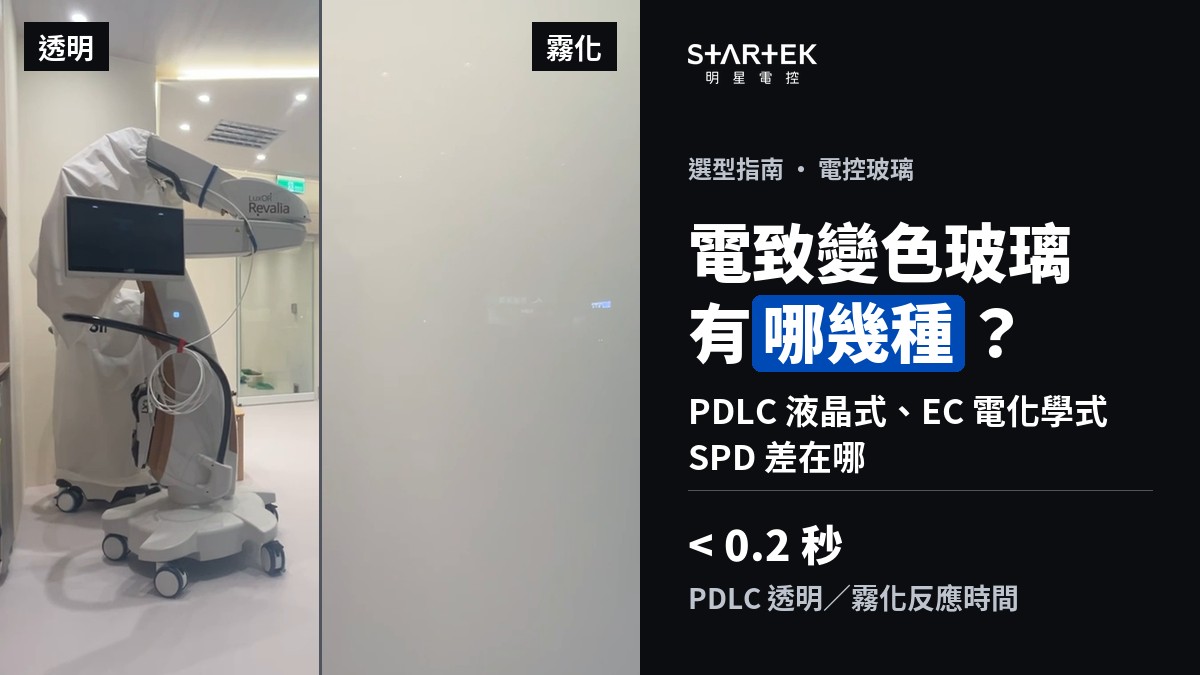
PDLC vs Electrochromic vs SPD: How to Choose the Right Switchable Glass Technology
Smart Glass Revealed -
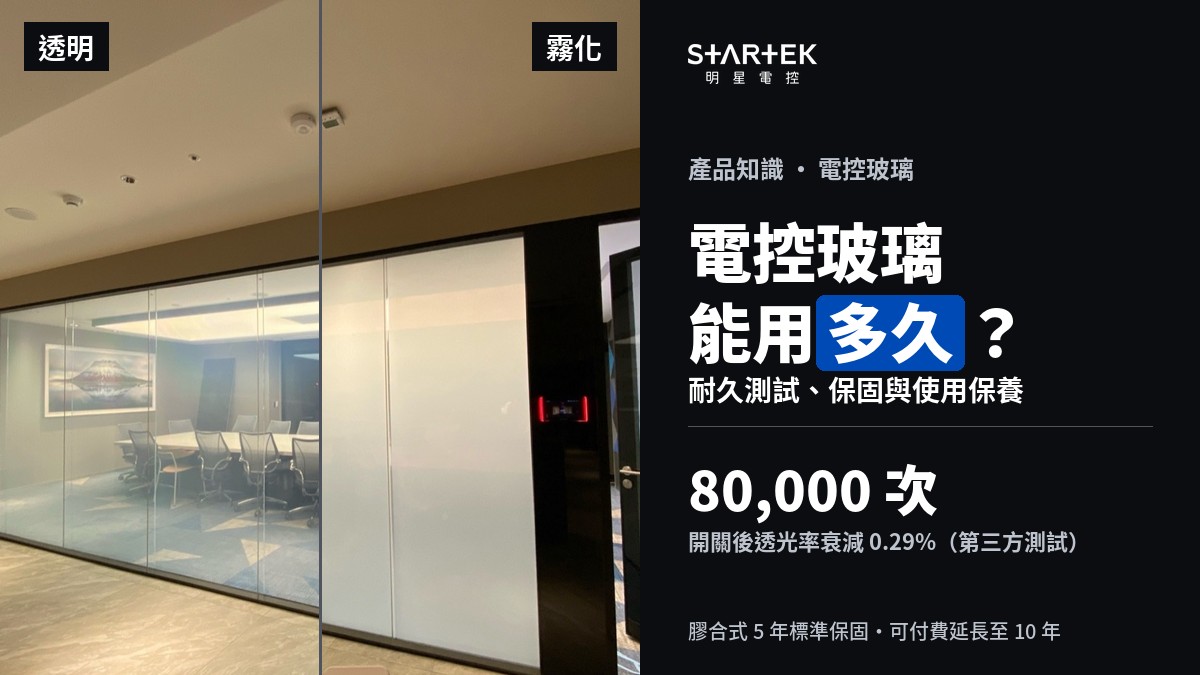
How Long Does PDLC Smart Glass Last? Durability Tests, Warranties, and Care
Smart Glass Revealed -
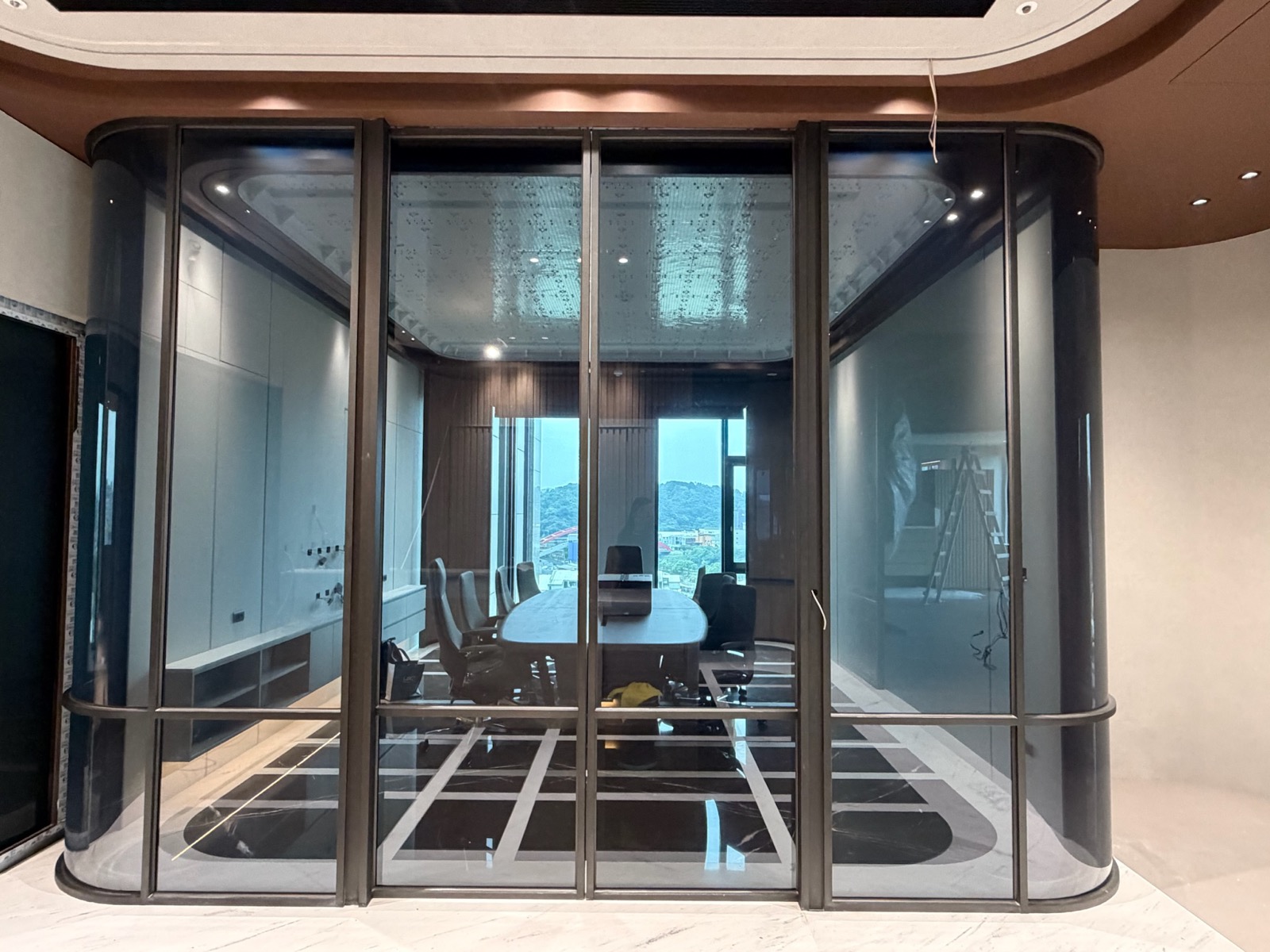
Retrofit PDLC Film or Laminated Switchable Glass? When Retrofit Film Works
Smart Glass Revealed