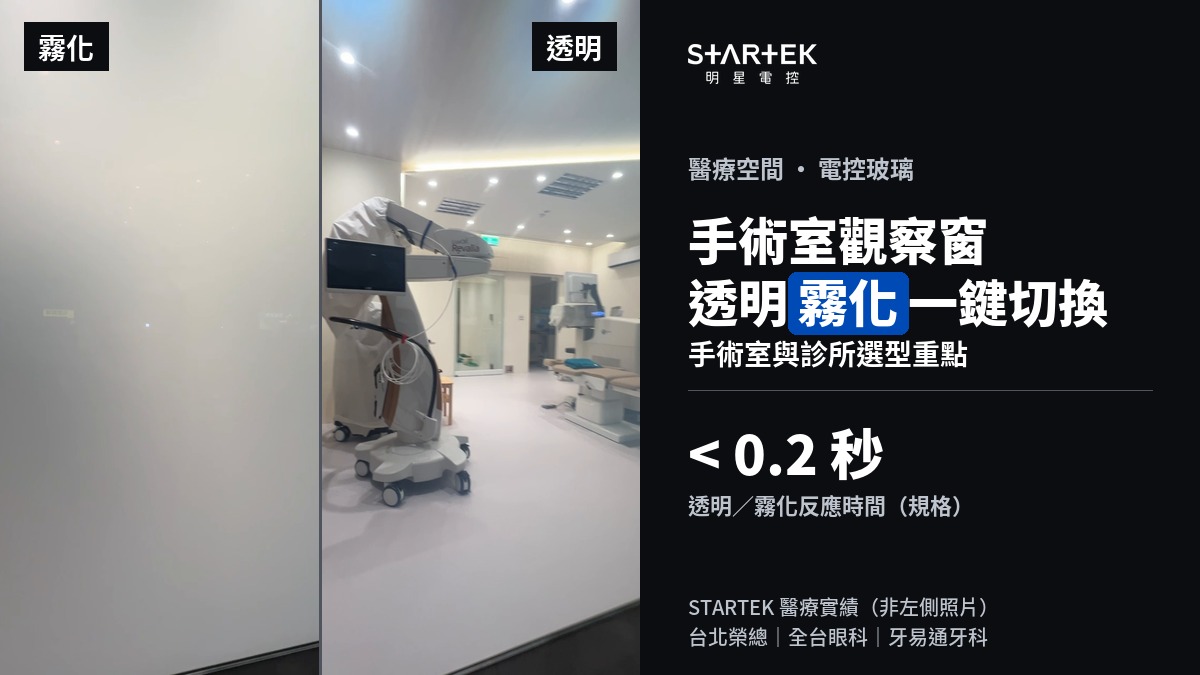
How to Choose Partition Wall Types? Comparing Drywall, Glass Partitions, Movable Walls, and PDLC
Many people searchPartition wall types, ostensibly looking for a list of materials, but actually asking:
Should this space use fixed walls, glass, or a switchable solution?
Because the so-called partition walls on the market, from light partitions, glass partitions, movable partition walls, to PDLC Electronic Control Glass (PDLC), are actually four completely different spatial logics behind them.
What do you think of the differences between the four types of partition walls?
light compartment
Core uses:fixed partition
Suitable space:Office area, residential secondary bedroom, functional partition
Advantages:Mature, direct and easy to understand
Note:Lighting and visual penetration are weak
General glass partition
Core uses:Partition while retaining daylight
Suitable space:Study room, conference room, commercial space
Advantages:Light space and good texture
Note:Privacy is usually a fixed state
Movable partition wall
Core uses:Flexible partitioning of large spaces
Suitable space:Classrooms, activity spaces, multi-purpose halls
Advantages:Removable and reconfigurable
Note:System and usage scenario restrictions are clear
PDLC Electronic Control Glass
Core uses:Transparency and privacy switching
Suitable space:Conference rooms, clinics, study rooms, high-end residences
Advantages:Normally open, atomized when needed
Note:Need more precise electrical control and construction method planning
1. Light partition: the most common fixed partition solution
If your space needs are clear and involve carving out an area stably, light partitions are usually easiest to include in the assessment.
Its advantages are:
- Construction team popularity
- Budget logic is relatively clear
- Functional boundaries are clear after completion
But its limitations are also straightforward: once the wall is completed, the state of the space is fixed. This may not be flexible enough for cases where light, transparency and design are important.
2. General glass partitions: make the space separate, but not smaller
Glass partitions are great for people who want to preserve light and visual extension.
Common scenarios include:
- Residential study room
- Office meeting room
- Commercial air reception area
- Exhibition space
Its value is not only beautiful, but also allows the space to maintain a sense of openness after partitioning.
But the problem is also very clear: transparent is transparent, and matte is matte. Most ordinary glass partitions do not have the ability to switch to "privacy only when needed".
3. Movable partition walls: The focus is on flexible reorganization of space
Movable partition wall The idea is different from light partitions and glass partitions.
It is not pursuing a light vision, nor is it doing detailed privacy switching, but is solving the problem of "whether the same large space should be divided into multiple small spaces."
So it's more common in:
- classroom
- Multifunctional meeting space
- Performance and event areas
If you want a mechanical, movable, and repartitionable system, it has its own value; but if you care about lighting and texture in daily office or residential situations, movable partition walls are usually not the first choice.
4. PDLC Electronic Control Glass: It’s not that the wall is more advanced, but that the space is more switchable
The focus of PDLC is not to make glass more expensive, but to change the glass partition from a fixed state to a switchable state.
That is:
- Normally transparent
- Nebulize when needed
This makes it particularly suitable for:
- Meeting room projection and discussion privacy
- Open/focused switching of residential study room
- Clinic, medical beauty, professional consultation space
- High-end master bathroom or suite type residence
If your space requires different modes at different times, the value of PDLC will be more obvious than fixed cubicles.
How to choose? Don’t ask about the material first, ask about the state of the space first
You can first use these four questions to judge:
1. Will this space always have a fixed purpose?
If so, light partitions or fixed glass may be sufficient.
2. Do you care about lighting and visual extension?
If that's a concern, glass systems often have advantages over solid walls.
3. Do you need switchable privacy?
If necessary, PDLC should be evaluated directly.
4. Do you want the position of the wall to change, or the status of the wall to change?
If the location changes, movable partition walls are more reasonable.
If it is switching between transparency and privacy, PDLC is the corresponding solution.
Where does STARTEK come in?
STARTEK’s role is not to make a hodgepodge of all partition wall types;PDLC Electronic Control Glass As the core, it helps users determine when situations should change from fixed wall thinking to switchable space thinking.
For some cases, traditional light compartments make sense.
But when the demand goes towards:
- spatial texture
- Daylight retention
- Instant privacy
- High-end or professional field experience
At this time, STARTEK’s PDLC solution will really come into play.
Conclusion: There are many types of partition walls, but what you really have to choose is spatial behavior
Light partitions, glass partitions, movable partition walls, and PDLC all look like "partitions," but they deal with different problems.
If you only look at the material names, it's easy to get confused.
If you first look at how the space is going to be used, and then go back to choose a system, the answer will be much clearer.
FAQ
What types of partition walls are there?
Common ones include light partitions, glass partitions, movable partition walls, and switchable privacy glass systems like PDLC Electronic Control Glass.
Are removable cubicle walls the same as PDLC?
no the same. Movable partition walls are changing the way space is divided; PDLC is changing the transparency and privacy of glass.
What kind of partition wall is suitable for a study room?
If you want to retain a sense of openness and daylight, glass partitions are usually better than solid walls; if you also need to switch to privacy, PDLC is more worthy of evaluation.
ending
If you are currently stuck on "should you build walls, glass, or switchable privacy?" instead of comparing material names first, it is better to sort out the space usage and time period changes to STARTEK. We can quickly help you decide which system to use.
Related Articles


Latest Articles
-
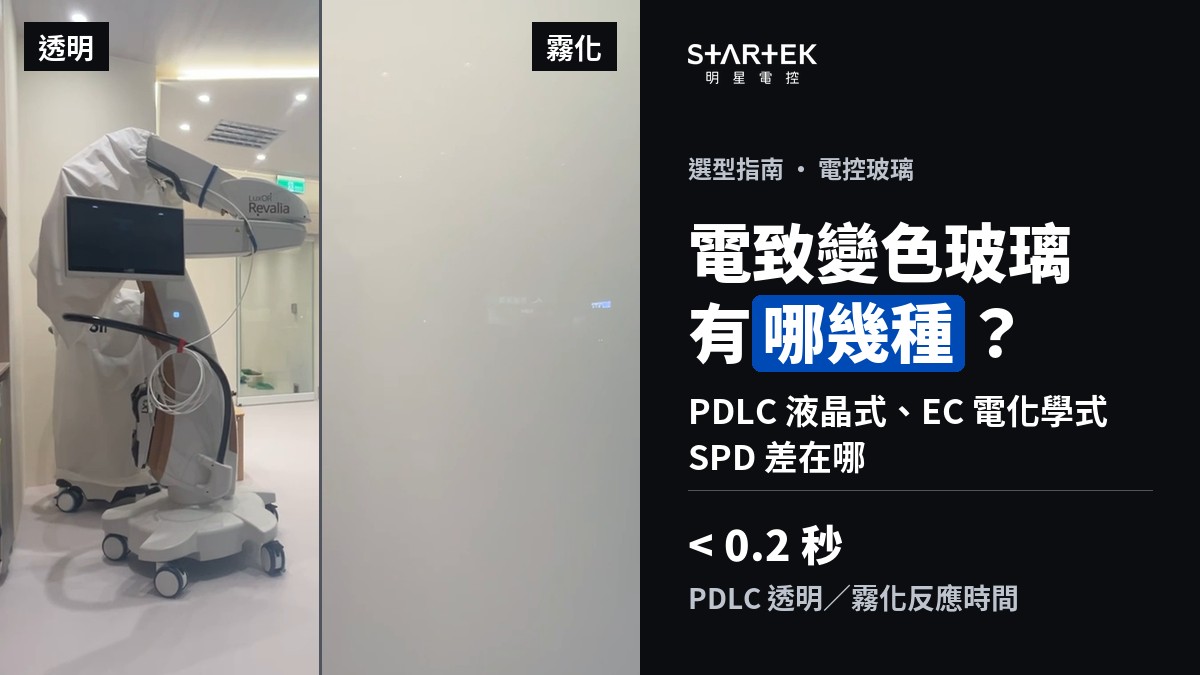
PDLC vs Electrochromic vs SPD: How to Choose the Right Switchable Glass Technology
Smart Glass Revealed -
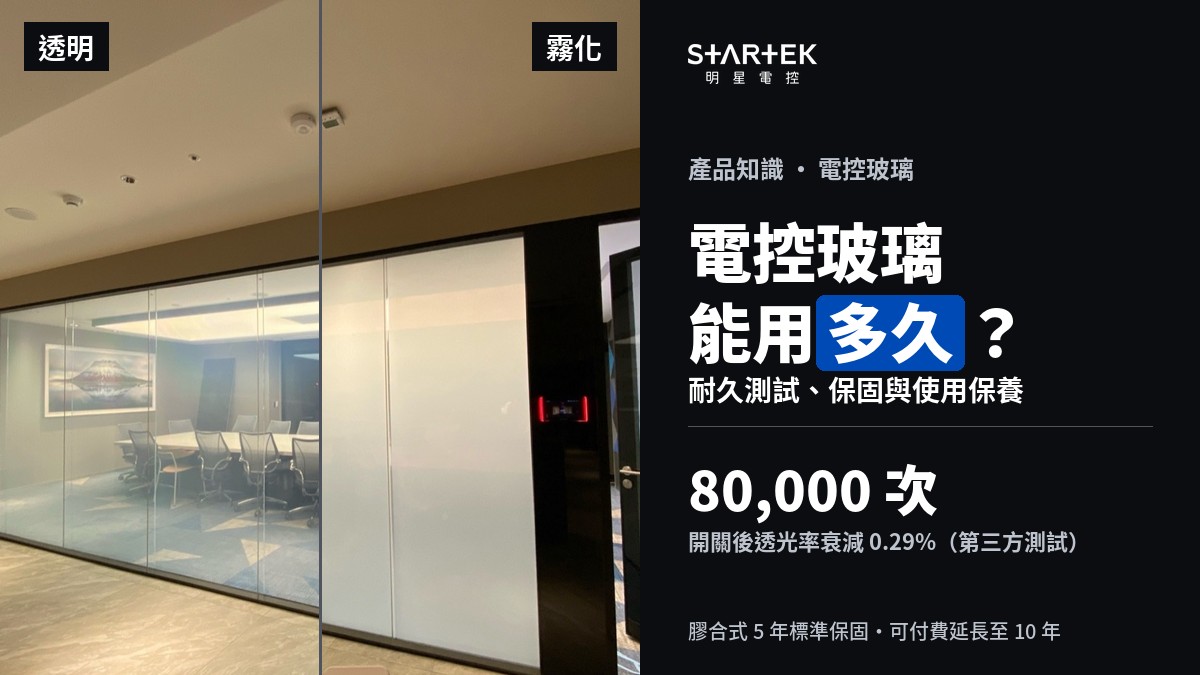
How Long Does PDLC Smart Glass Last? Durability Tests, Warranties, and Care
Smart Glass Revealed -
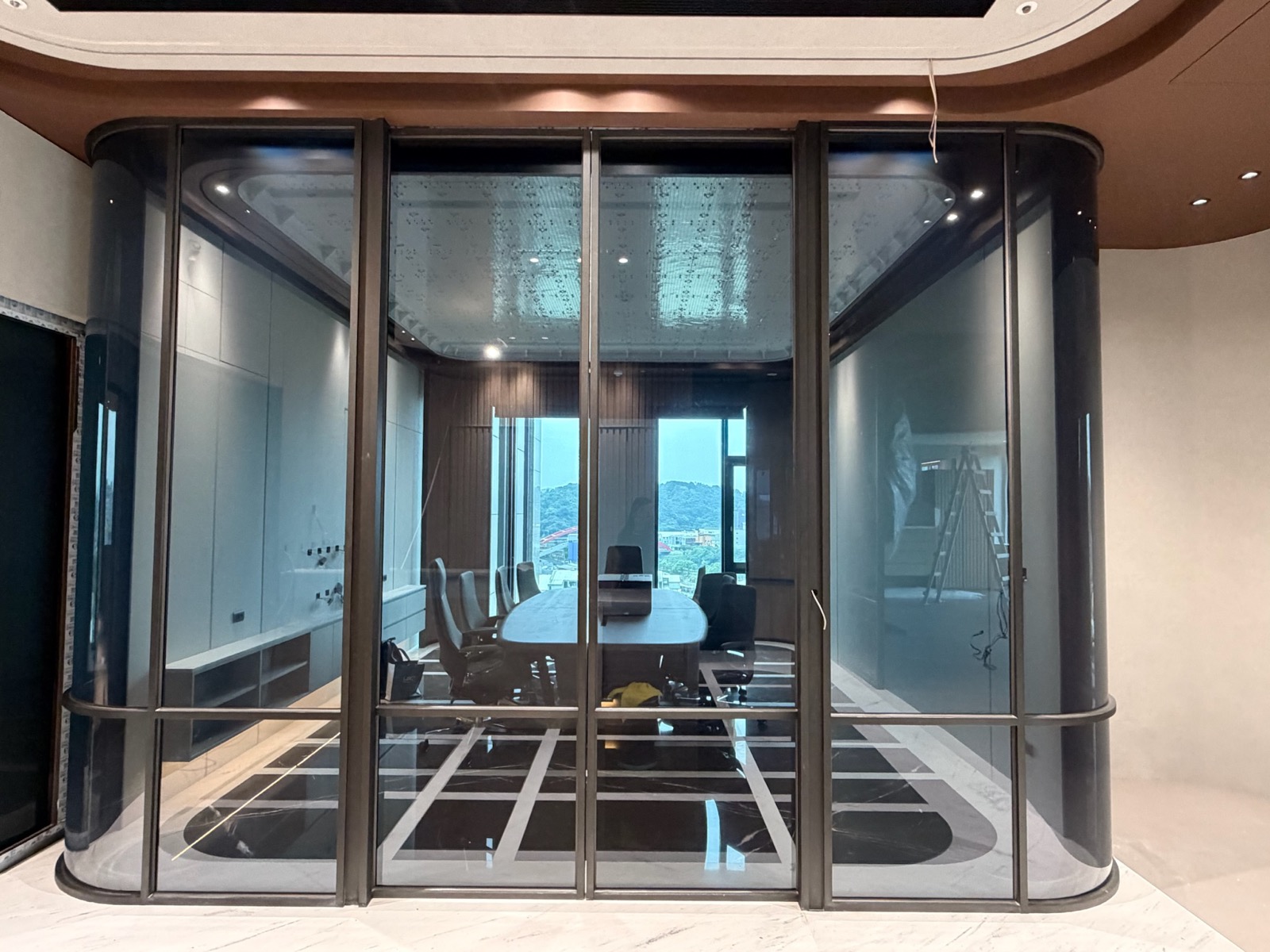
Retrofit PDLC Film or Laminated Switchable Glass? When Retrofit Film Works
Smart Glass Revealed