Can You See Through PDLC Smart Glass When It's Frosted? Distance, Edges, and Lighting
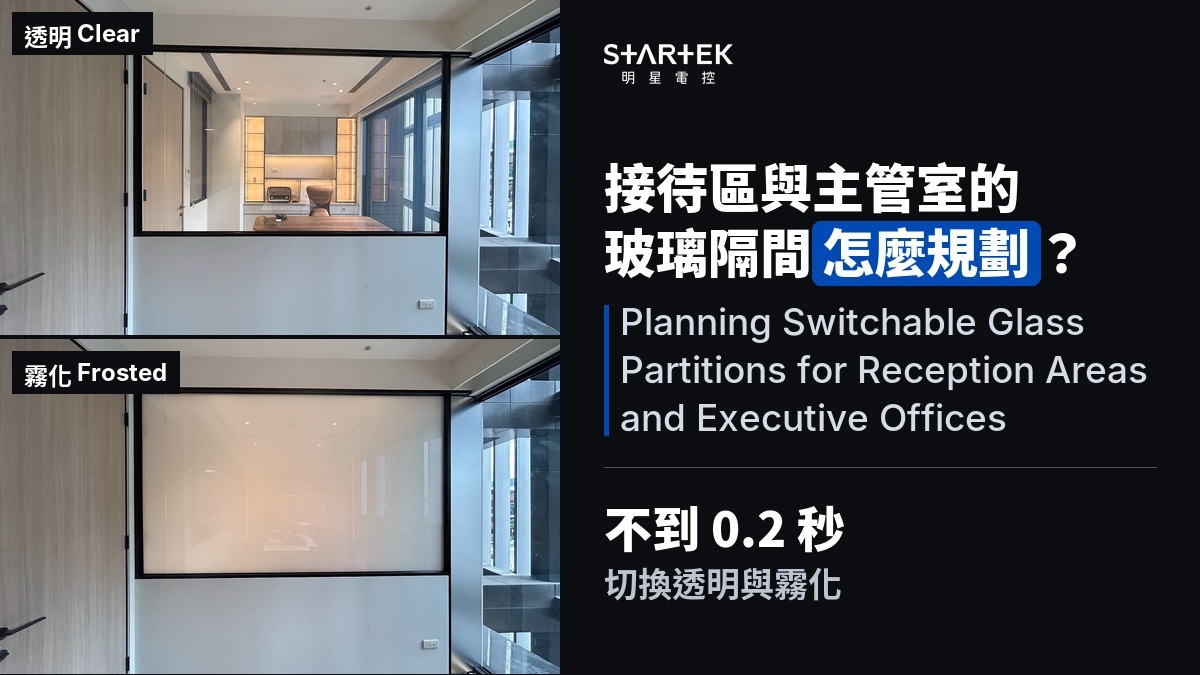
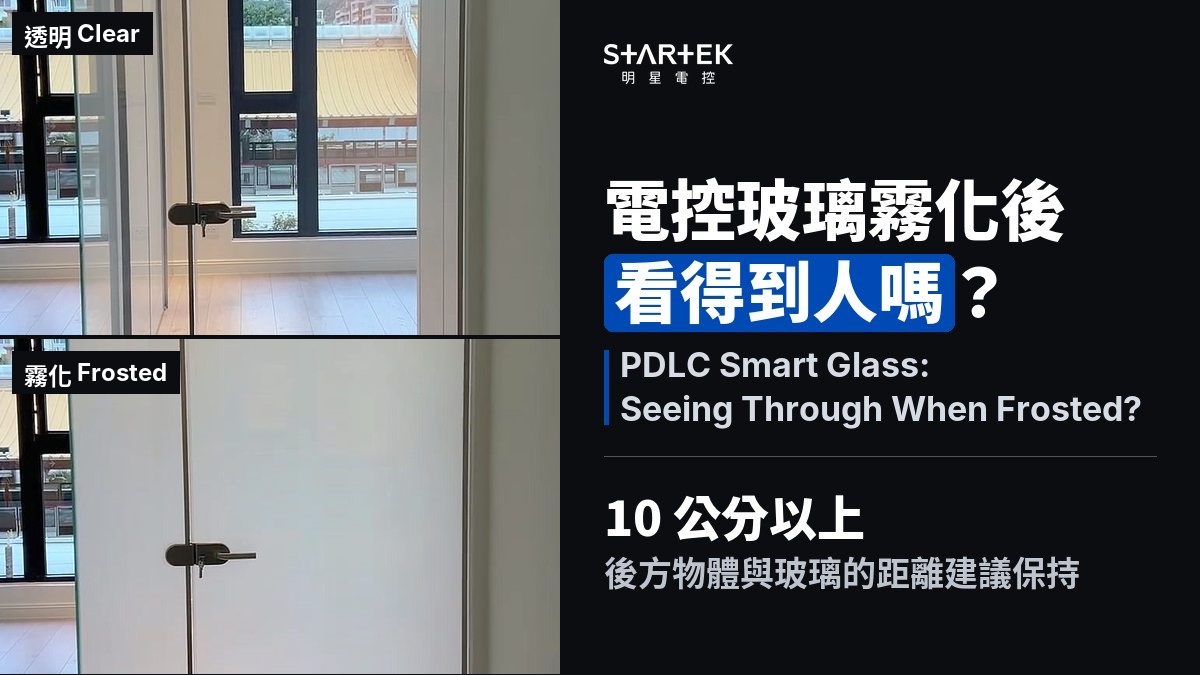
When switchable glass is frosted, can people outside still see in? This is one of the most common questions from clients and designers planning conference rooms and executive offices. The short answer: in the frosted state, you cannot read text or make out interior details from outside — but the level of privacy depends on the distance between objects and the glass and on the edge structure, while lighting affects how the glass looks when transparent. This article explains each factor so you can prevent "installed but not private enough" during the design phase. STARTEK is a Taiwan-based PDLC switchable glass specialist, offering a complete product range and end-to-end service.
Key Facts
- PDLC switchable glass creates a uniform white opacity when frosted — interior details are not visible from outside
- Objects behind the glass should be at least 10 cm away; anything pressed closer may show a faint outline
- A narrow always-transparent "inactive edge" runs around the perimeter: approximately 15 mm on the electrode side and 5 mm on the non-electrode side — cover it with framing or edge trim
- Lighting affects clarity in the transparent state: linear fixtures and indirect lighting are recommended; avoid panel lights facing the glass
- Retrofit film splices (when the glass exceeds film width) leave a 5–7 mm transparent seam that does not frost
- Applies to: all STARTEK interior PDLC switchable glass products
Specification source: STARTEK installation guide and product specifications (2026)
Distance: Keep Objects at Least 10 cm from the Glass
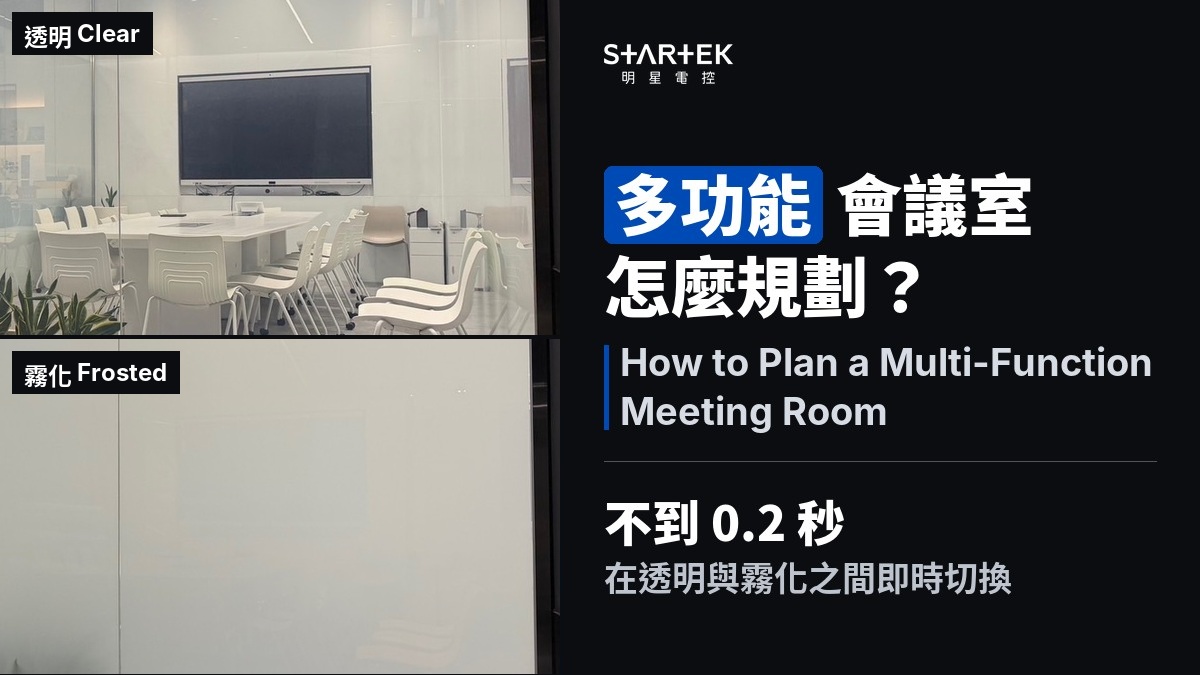
When PDLC glass is frosted, liquid crystal molecules scatter light to create a uniform white opacity. However, if an object (a cabinet, wall, display, or screen) is pressed against or very close to the glass, its outline may still be faintly visible even in the frosted state.
Design recommendation: Maintain at least 10 cm between any object behind the glass and the glass surface. With this distance, frosted privacy is effective. This applies to whiteboards behind conference room glass, bookshelves in executive offices, and display items in showroom partitions.
In practice, if a presentation screen is mounted on the wall directly behind the switchable glass with only a few centimeters of clearance, its outline may be faintly visible when frosted. Consider moving the screen to a side wall or keeping it at least 10 cm from the glass to improve privacy.
Inactive Edge: The Always-Transparent Perimeter
The PDLC film is slightly smaller than the glass itself. This creates a narrow strip around all four edges that cannot be electrically switched and remains transparent even when the rest of the glass is frosted:
- Electrode side (where the wiring connects): approximately 15 mm
- Non-electrode side: approximately 5 mm
This is a structural characteristic of PDLC film, not a defect.
Design recommendation: Cover the inactive edge with framing, edge trim, or a decorative border during the design phase. Ensure drawings account for the required width. For retrofit installations, a color-matched edge trim wide enough to fully cover the roughly 1.5 cm electrode strip is a required component, not an option.
The installation guide also covers object distance and inactive edges in its design tolerances section.
Lighting: The Right Fixture Type Makes a Visible Difference
Switchable glass is a light diffuser. The type of lighting in and around the space directly affects the clarity of the transparent state and how hazy it looks. The wider the viewing angle and the greater the brightness difference between the two sides, the more pronounced the haze effect.
Recommended fixtures
- ✅ Linear lights, indirect lighting, wall-wash fixtures — light does not strike the glass directly; soft, diffused incidence keeps the transparent state clear
Not recommended
- ❌ Panel lights, backlit film ceilings, direct spotlights aimed at the glass surface — large-area, high-brightness sources create glare on the glass, reducing clarity in the transparent state
When switchable glass serves as the primary sightline (conference room partitions, executive office walls), prioritize linear or indirect lighting and avoid placing large panel lights directly opposite or above the glass.
For fixture choices, see the lighting recommendations in the installation guide.
Splice Seam: Retrofit Film Beyond Width Limits
Self-adhesive PDLC film comes in rolls with a maximum width. If the glass is wider than the film, a splice is required. The splice leaves a gap of approximately 5–7 mm that does not frost — when the glass is frosted, a thin transparent line will be visible.
Design recommendation: Confirm the splice position with the client before installation and obtain written agreement. If the seam is a concern, consider laminated glass instead (laminated film width is 2,000 mm, wider than the 1,800 mm available for retrofit film).
For how the splice position is confirmed during a retrofit project, see How Is Retrofit PDLC Smart Glass Installed?
FAQ
Q1: Is the glass completely opaque when frosted?
Interior details and text are not visible from outside. However, objects pressed within about 10 cm of the glass may show a faint outline. Keeping at least 10 cm of distance provides effective privacy.
Q2: What is the transparent strip around the edges?
That is the "inactive edge" — a structural characteristic where the PDLC film is slightly smaller than the glass (approximately 15 mm on the electrode side, 5 mm on the non-electrode side). It is not a defect. Framing or edge trim covers it.
Q3: Can the wrong lighting affect how the glass looks?
Yes. Large panel lights facing the glass can cause glare in the transparent state, making it harder to see through. Linear fixtures or indirect lighting are recommended for spaces where switchable glass is the primary partition.
Q4: Is the retrofit splice seam very noticeable?
The splice is about 5–7 mm wide and does not frost — a thin transparent line is visible when the rest of the glass is frosted. Confirm the splice position with the client and obtain written approval before installation. If appearance is a priority, consider laminated glass: its film width is 2,000 mm versus 1,800 mm for retrofit film, though whether a splice is needed still depends on panel size.
Q5: Does Startek R (reverse PDLC) frost the same way?
Startek R frosts when powered on (the reverse of standard PDLC). The distance and inactive-edge guidance above still applies. The difference is that Startek R requires continuous power to maintain the frosted state.
Want to understand how PDLC frosting performs in your space?
Related Articles
Latest Articles
-
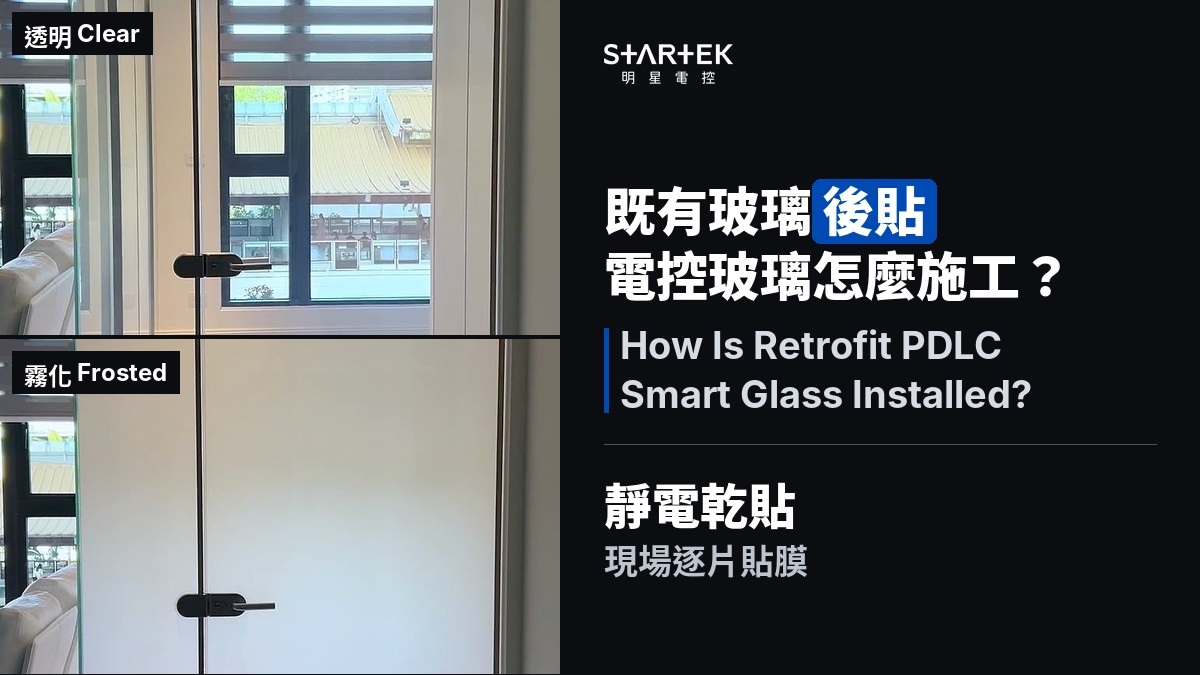
How Is Retrofit PDLC Smart Glass Installed? The Process from Survey to Handover
Smart Glass Revealed